Motorola Razr V3 Review Review
The Motorola Razr V3 redefined mobile phone design in the mid-2000s with its sleek clamshell form factor, targeting style-conscious users who wanted a blend of fashion and functionality. As a classic flip phone, it falls under the category of mobile phones and stands out for its slim profile and innovative engineering at the time. This review dives deep into the Motorola Razr V3 Review, exploring its design, performance, features, and overall value for users looking back or curious about this iconic device.
Released in 2004, the Razr V3 was a trendsetter rather than a powerhouse, tailored for those who favored portability and style over raw technical specs. It introduced a thin, lightweight design that contrasted with the bulkier phones of its era. While subsequent variants and competitors have since emerged, this review focuses on the original Razr V3 model that captured the imagination of millions worldwide.
Overview / Specifications
| Specification | Details |
|---|---|
| Brand | Motorola |
| Category | Mobile Phone (Feature Phone) |
| Model | Razr V3 |
| Release Date | 2004 |
| Display | 2.2-inch TFT main screen (176 × 220 pixels), 96 × 80 pixels external |
| Battery | Li-Ion 680 mAh |
| Dimensions | 98 × 53 × 13.9 mm (folded) |
| Weight | 99 grams |
| Operating System | Proprietary Motorola OS |
| Connectivity | GSM 900 / 1800 / 1900, Bluetooth 1.1 |
| Camera | VGA 0.3 MP (rare variants did not include a camera) |
| Starting Price at Launch | Approx. $499 (unsubsidized) |
| Warranty | Varies by region, typically 1 year |
Design & Build
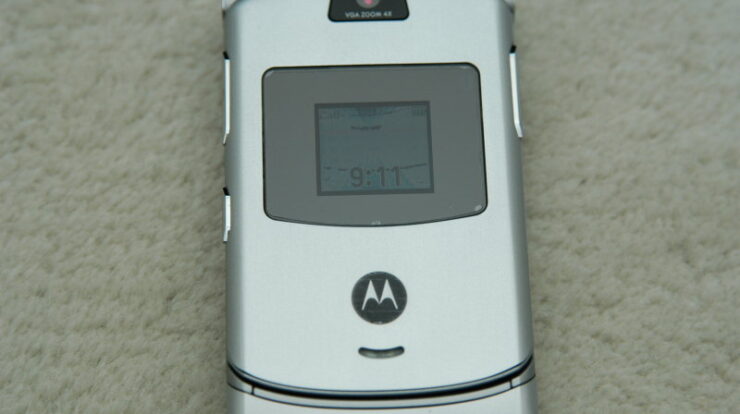
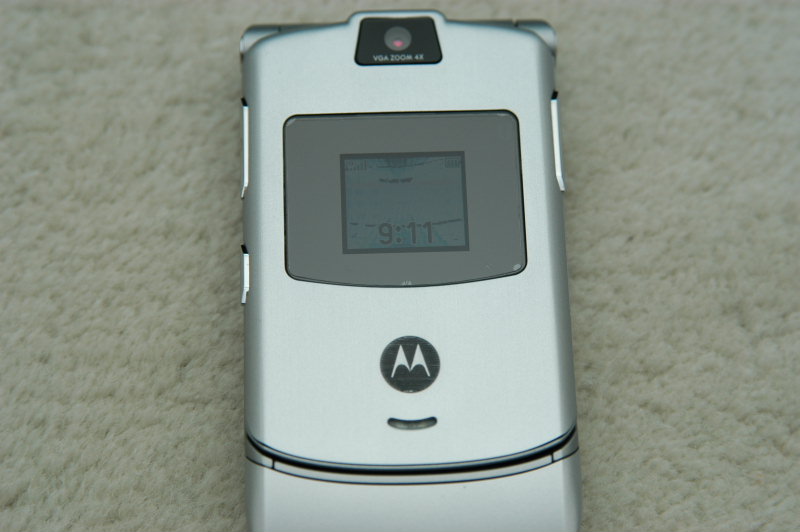
The Motorola Razr V3’s design remains its most celebrated trait. Its ultra-thin clamshell form factor, made possible by an innovative use of materials like aluminum and backlit metal keypad, gave it a distinct premium feel. At just 13.9 mm thick and weighing under 100 grams, it was remarkably portable and comfortable to hold. The external mini display was a clever addition that allowed users to see caller ID and notifications without flipping open the phone, adding to its convenience.
Beyond aesthetics, the build quality was solid with a robust hinge mechanism — a crucial feature given daily opening and closing. Its brushed metal finish resisted fingerprints and scratches fairly well. However, some users noted that the thin design occasionally compromised durability under heavy use or accidental drops. Overall, the Razr V3 set a new standard for stylish yet functional mobile phone design.
Performance
Performance-wise, the Motorola Razr V3 was representative of early-2000s feature phones. It delivered basic telephony functions reliably, with decent call quality and signal reception typical for GSM devices of that era. The proprietary OS was straightforward but lacked the flexibility and speed of modern smartphones. Navigation through menus was smooth, and the keypad, though metallic, provided satisfying tactile feedback.
Battery life was respectable, with the 680 mAh Li-Ion battery offering up to 6 hours of talk time and several days on standby — impressive given the limited power demands.
Camera quality was modest, reflecting the standard VGA resolution typical for phones at the time, and not intended for serious photography. Multimedia features were basic, focusing mainly on ringtone customization and limited organizer tools.
Features
- Display: Main color TFT and small external display for quick info glance
- Camera: VGA camera suitable for snapshots and MMS
- Connectivity: Tri-band GSM for wide network compatibility, Bluetooth for wireless accessories
- Audio: Polyphonic ringtones and external speaker for calls and alerts
- Messaging: SMS, MMS, and basic email client support
- Extras: Calendar, alarm, calculator, and other standard PIM (personal information management) tools
Compared to modern smartphones, the Razr V3’s feature set may seem limited, but at launch, it balanced essential functionality with trendsetting style. It did not support 3G, Wi-Fi, or app ecosystems, reinforcing its role as a stylish phone rather than a multimedia device.
Price & Value
At launch, the Motorola Razr V3’s price was around $499 unsubsidized, placing it in the premium segment for mobile phones at the time. Multiple color variants and limited editions were later introduced, potentially affecting price in various markets. Warranty terms generally lasted one year, standard for electronics then.
In retrospect, its value lay more in design innovation and making a fashion statement than in raw specs or features. Collectors and enthusiasts often regard the Razr as a cultural icon, which adds intangible value beyond typical ownership costs.
Main Competitors
- Sony Ericsson T610: A contemporary competitor known for its solid camera and multimedia capabilities. While the T610 offered more advanced features, it lacked the Razr V3’s ultra-thin design elegance, making it suitable for users prioritizing features over form.
- Nokia 6600: Another rival offering Symbian OS with better multimedia and business functions, albeit bulkier. It appealed to users seeking productivity and smartphone-like functionality, contrasting the Razr V3’s focus on style and simplicity.
The Razr V3’s advantage was its iconic design and portability, while competitors targeted feature-rich experiences. Ultimately, choice depended on whether aesthetic appeal or technical capabilities mattered more to the buyer.
Pros & Cons
| Pros | Cons |
|---|---|
| Elegant and thin design with premium metal build | Limited feature set compared to contemporaries |
| Lightweight and highly portable | Low-resolution VGA camera |
| Solid call quality and battery life for a feature phone | Proprietary OS lacking app support |
| External display for quick notifications | Durability issues with hinge reported by some users |
Final Verdict
The Motorola Razr V3 Review review highlights a phone that wasn’t trying to lead with technological innovation but rather revolutionize mobile phone design. Its biggest strength lies in its style and build, which made it a cultural icon and a fashion statement. The weakest points stem from its limited features, modest camera, and durability concerns over long-term use.
This phone is best suited for collectors, enthusiasts of classic phones, or users who value a standout design over advanced smartphone functionality. For those seeking apps, high-performance cameras, or extensive multimedia features, modern smartphones inevitably outperform the Razr V3.
Overall, the Motorola Razr V3 earns a solid 7 out of 10 for its impactful design legacy and reliable basic performance. It remains a must-know piece of mobile phone history and a symbol of early-2000s mobile innovation.
Motorola Razr V3 Review | TheVooner.com
Motorola Razr V3 Review | theVooner.com
Hax.at – Review: Motorola Razr V3 (Black)

hax.at – Review: Motorola Razr V3 (Black)
Motorola Razr V3 Mobile Phone Review – When Phones Were Made To Impress
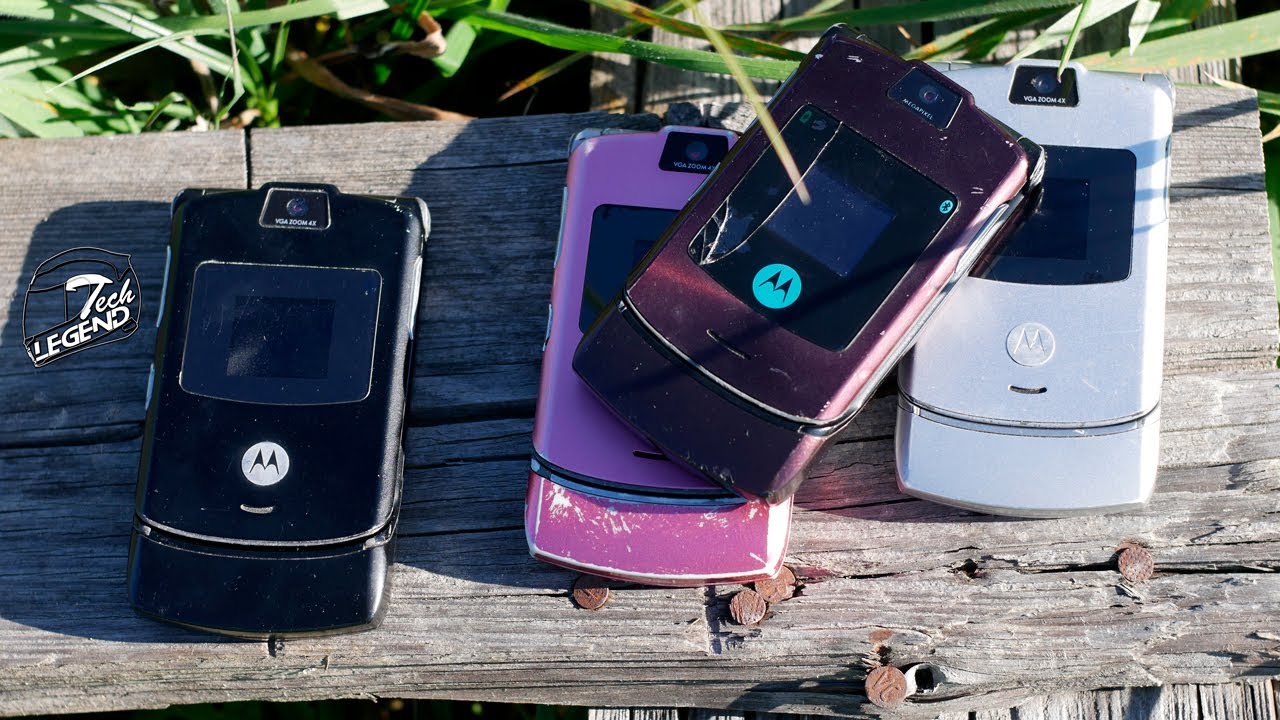
Motorola Razr V3 Mobile Phone Review – When phones were made to impress …
Motorola RAZR V3 Pictures, Official Photos
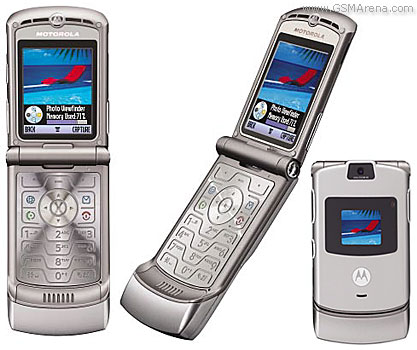
Motorola RAZR V3 pictures, official photos
Motorola Razr V3 Review – PhoneArena
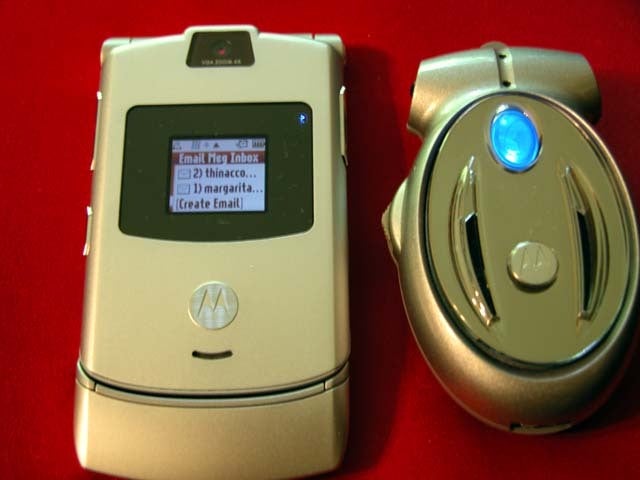
Motorola Razr V3 review – PhoneArena